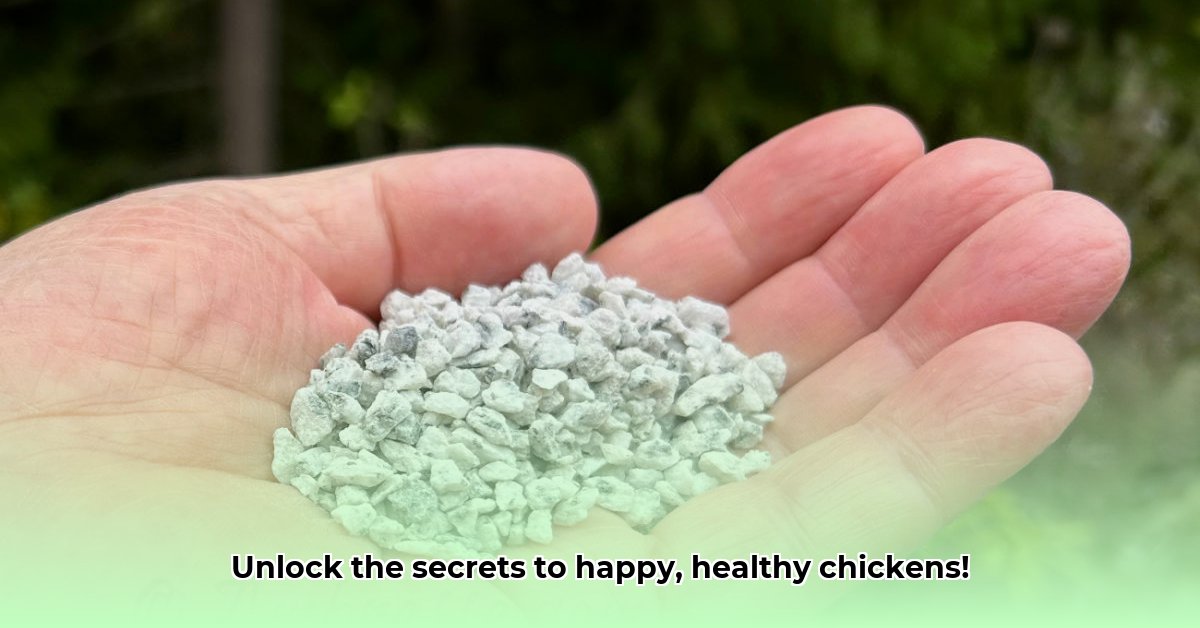
Understanding Chicken Grit: The Key to Healthy Digestion
Chickens lack teeth, relying on grit – small stones – to grind food in their gizzard (a muscular part of their stomach). This crucial process ensures proper nutrient absorption, impacting growth, egg production, and overall bird health. Without sufficient grit, your chickens will struggle to digest their food, leading to poor health and reduced productivity. Choosing the right grit is a fundamental step towards raising healthy, productive, and sustainable poultry. For more information on sustainable poultry farming practices, check out this helpful resource.
Exploring Your Grit Options at Tractor Supply
Tractor Supply offers various chicken grit types, each with unique properties. The best choice depends on your chickens' age, diet, and your commitment to sustainable practices.
| Grit Type | Composition | Pros | Cons | Sustainability Considerations |
|---|---|---|---|---|
| Granite Grit | Igneous rock | Durable, long-lasting, widely available, generally affordable. | Can be too hard for young chicks; may wear down slower. | Source locally to reduce transportation emissions and support local businesses. |
| Limestone Grit | Calcium carbonate | Excellent calcium source, crucial for strong eggshells. | Can wear down faster than granite; may not suit all diets. | Choose from sustainably quarried limestone to minimize environmental impact. |
| Oyster Shell Grit | Calcium carbonate from oyster shells | Very high in calcium; ideal for laying hens; supports strong eggshells. | Often more expensive; availability might vary. | Ensure sustainably harvested oyster shells to avoid overexploitation and habitat damage. |
| Quartz Grit | Quartz | Very hard and durable, long-lasting. | Can be harder on gizzards than other options. | Prioritize sustainably mined quartz to minimize environmental impact. |
Selecting the Perfect Grit: A Simple Guide
Choosing the right grit involves considering several factors:
Chicken Age: Young chicks require finer grit; adults can handle coarser options.
Diet: Chickens consuming primarily hard grains may need less grit than those on softer feeds.
Budget: Granite grit is typically the most affordable; oyster shell grit tends to be pricier.
Sustainable Sourcing: Prioritize locally sourced grit to minimize your carbon footprint. Check Tractor Supply labels for origin information.
Observation: Start with a smaller bag of your chosen grit and monitor your chickens' health and egg production. Adjust as needed.
Beyond Grit: Building a Sustainable Poultry Farm
Sustainable poultry farming encompasses more than just grit selection. It requires a holistic approach:
High-Quality, Sustainable Feed: Opt for locally sourced, non-GMO feed to support local farmers and reduce transportation emissions. Consider organic and sustainably grown ingredients. (This reduces your carbon footprint and supports local economies.)
Effective Manure Management: Compost chicken manure to create nutrient-rich fertilizer for your garden, reducing waste and minimizing reliance on chemical fertilizers. (This converts waste into a valuable resource.)
Responsible Antibiotic Use: Focus on preventative health measures (proper nutrition, clean housing, stress reduction) to minimize antibiotic use. Consult a veterinarian for guidance. (This promotes bird well-being and reduces antibiotic resistance.)
Water Conservation: Implement efficient watering systems to conserve water and reduce environmental impact. (This is vital for conservation and reduces your operational costs.)
Sustainable Farming for Healthier Chickens and a Healthier Planet
Choosing the right grit and adopting comprehensive sustainable practices benefits your chickens, your wallet, and the environment. Remember, sustainable farming is a journey, not a destination. Small, thoughtful choices, like opting for locally sourced grit, accumulate to create substantial positive impact.
Grit: Your Flock’s Unsung Digestive Hero
Ever wondered how a chicken digests its food without teeth? The secret lies in grit! These tiny, sharp stones are absolutely essential for your feathered friends. Chickens swallow their food whole, and it travels down to a muscular organ called the gizzard. Here, the ingested grit acts like a set of internal teeth, grinding down tough grains, seeds, and even insects into smaller, more digestible particles. Without adequate grit, chickens can struggle to properly process their meals, leading to nutrient deficiencies and poor overall health, making this seemingly insignificant component a cornerstone of their digestive well-being.
Providing grit to your flock is incredibly simple and crucial for their health. You should always offer insoluble grit, like crushed granite, in a separate feeder or scattered on the ground, allowing your chickens free access to it. They instinctively know how much they need and will consume it as required. Even if your chickens are primarily fed commercial layer pellets, which are easier to digest than whole grains, they still benefit greatly from grit, especially if they free-range and forage for tougher bits of food. Ensure a constant supply, and you’ll be supporting their natural digestive process, helping them thrive and get the most out of every meal.